
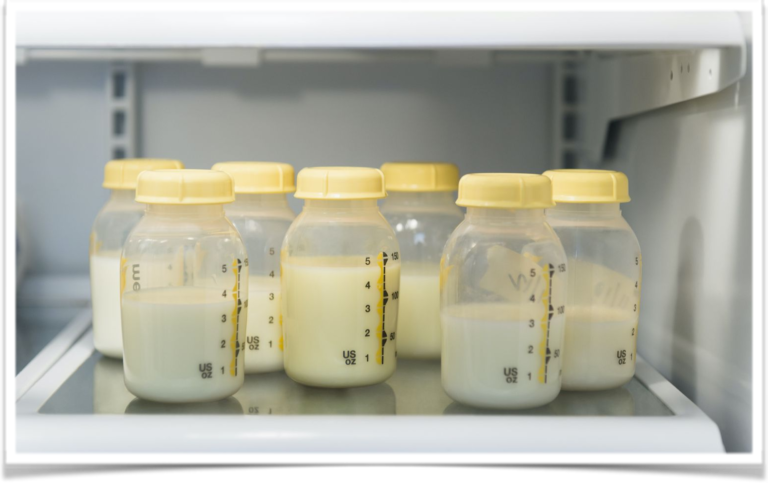
What is high lipase?
Lipase is a naturally occurring enzyme in breast milk that breaks down fats in breast milk so that it is easily digestible for your baby. High lipase breast milk is simply breast milk with a higher concentration of the lipase enzyme. Its higher concentration can sometimes affect the taste and smell of the milk, but this doesn’t diminish its nutritional value.
You might have noticed a strange soapy smell from your breast milk or your baby rejecting milk that has been stored in the refrigerator. These could be signs of high lipase. Here are a few things to know if you have milk high in lipase:
- You could be exclusively pumping or have pumped to build a freezer stash and are mortified to find the taste and smell of the milk has changed. The good news is that there are ways to manage the altered taste. But first we have to identify milk that is high in lipase.
- Breast milk with high lipase levels may develop a soapy, metallic, like eggs or fishy taste after being stored. This happens because the enzyme lipase breaks down fats more quickly than usual—but the milk is still perfectly safe and nourishing for your baby.
- Some babies don’t mind the change in taste, while others may be more sensitive to it. If your baby seems reluctant, you can try mixing stored milk with fresh milk, combining it with purees (if they’ve started solids), or offering it chilled to make it more acceptable.
If you think high lipase might be the cause, it’s a good idea to check in with a pediatrician or lactation consultant to rule out other possibilities. And most importantly, know that this is completely normal—there’s nothing wrong with you or your milk.
Is it safe for the baby?
Milk high in Lipase is just as safe and nutritious as any other breastmilk. Some babies may notice the difference in smell and taste and refuse the bottle while other babies may not. There is no evidence of high lipase milk causing digestive issues.
How can you prevent high lipase milk?
- Scald the milk before storing Heating the milk soon after pumping can stop the lipase from breaking down fats.
- Store milk quickly Put milk in the fridge or freezer right after pumping to slow the enzyme activity.
- Use milk sooner Some people find the taste changes after 24–48 hours in the fridge, so using milk earlier may help.
- Mix with fresh milk Combining fresh milk with stored milk can sometimes make the taste more acceptable for babies.
- Check storage practices.
- Sterilized containers
- Proper fridge/freezer temperatures
- Small storage portions
What is scalding and how to scald breastmilk?
Scald Your High Lipase Breast Milk: Gently heating your milk can deactivate the lipase enzyme however, scalding could reduce some of the beneficial nutrients and gut bacteria you do want to preserve in your breast milk.
How to Scald Breast Milk (Step-by-Step)
- Pour freshly expressed milk into a small clean saucepan. Use fresh milk only (before refrigerating or freezing)
- Heat the milk slowly on the stove over medium-low heat.
- Watch for tiny bubbles forming around the edges of the pan. This happens at about 180°F (82°C). Do not let it boil.
- Remove immediately from heat once bubbles appear around the edges.
- Cool the milk quickly. Place the container in a bowl of ice water or cold water.
- Store the milk. Refrigerate or freeze once cooled.
