
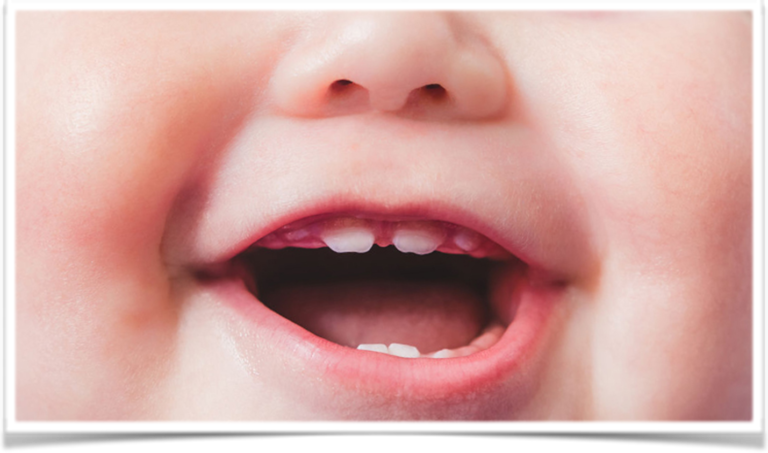
Teething varies from baby to baby
A small number are born with teeth already showing through their gums, while others may not get their first tooth until after their first birthday. Generally most Babies get their first teeth at 4-6months. Many women may face challenges while teething and breastfeeding. Here are a few key points to keep in mind.
Signs of teething
There are a few signs you can look out for to know that your baby is teething. Here are a few:
Excessive drooling: can cause chin and neck rashes
Crankiness or Fussiness: gum discomfort can cause irritability
Feeding changes: refusing feeds, shorter feeds or pulling off the breast or bottle
Ear pulling: jaw pressure from teething can feel like ear pressure
Chewing on fingers and toys: helps relieve gum pressure
Sleep disturbances: more night wakings or difficulty settling
Gum changes: red, swollen or tender gums with white line
Stool changes: teething can stimulate gut movement due to excessive saliva and can cause loose stools.
How to soothe a baby who is teething:
When babies begin teething it can be very uncomfortable. Here are a few ways to to help relieve the pain.
- Numb babies gums with a damp washcloth wrapped in an ice cube or breast milk cube. This helps take the pressure off the gums. Remember to use numbing gels containing benzocaine or lidocaine like Anbesol®, Baby Orajel®, Cēpacol®, Cloraseptic® and Orabase® with caution as some of them are considered dangerous for teething infants under 2.Numbing gels also cause the back of the throat to become numb which causes difficulty is swallowing and can lead to chocking.
- Massage the babies gums with clean fingers.
- Offer the baby clean, firm teething ring or toy that has been chilled in the freezer. Use teething rings made of firm rubber instead of ones filled with gel as they can break and leak.
- Breastfeeding can be very soothing for baby who is in pain and discomfort.
What to do if baby bites
- First check your baby’s position. Babies nurse best with their heads slightly tilted back so the chin is forward rather than tucked into the chest. As your baby grows, your old nursing position may need a slight adjustment. Check to make sure it isn’t putting your baby in a tucked chin position.
- If your baby bites or clamps their jaw while nursing, gently remove them and place them on the floor. Calmly but firmly say, “No biting.” Wait a minute or two—this may feel like a long time to your baby—then pick them up and offer to nurse again. This helps your baby learn that biting ends the nursing session, and if they want to continue nursing, they cannot bite.
- Another approach is to gently pull your baby closer to the breast when they bite. Although it may sound counterintuitive, bringing your baby in close makes it briefly harder for them to breathe, which encourages them to open their mouth wide and release the bite. This should be a quick movement—your baby’s nose is only pressed into the breast for a second or two. This method tends to work best with babies under six months old, as they quickly begin to associate biting with that brief discomfort and learn to stop clamping down.
- A baby who tends to bite at the start of a feeding may be impatient for the milk to start flowing. Some breast compression before you latch on or as they are taking those first few sucks may speed up the first milk release.
- It’s helpful to remember that when a baby is properly latched during breastfeeding, their tongue covers the lower teeth, making it unlikely for them to bite you while actively feeding without also biting their own tongue. Your baby’s bottom teeth are covered by the tongue. The top teeth do rest on the breast and may, at times, leave small indentations in the breast. The work of breastfeeding is done by the lower jaw and tongue. The top teeth are not moving on the breast. If your baby is clamping down, you will want to pay close attention to the tongue position. If you feel it shifting, you may want to say their name or rub their back to distract them from biting. You can also quickly put a finger between their jaws and take them away from the h as the feeding is finishing, before they bite.
- If your baby is frequently clamping down while feeding, try to avoid pacifiers and bottles. It can be confusing for them when one source of sucking doesn’t respond to being bitten, while the other (mom) reacts strongly when it happens.
