
Tongue and Lip Tie Management and after care
What is tongue tie?
Tongue tie (ankyloglossia) is a condition in which the lingual frenulum — the thin band of tissue connecting the tongue to the floor of the mouth — is unusually short, thick, or tight, restricting the tongue’s movement. Normally, the frenulum becomes thinner and recedes before birth, but when this process does not occur, tongue mobility may be limited. Tongue tie often has a familial pattern and is reported more frequently in boys than in girls. It is also associated with a high-arched or atypically shaped palate, as restricted tongue movement during development can influence the formation of the palate.
Here are the 4 common anatomical types of tongue-tie (ankyloglossia) using the widely used Coryllos classification:
| Coryllos Type | Frenulum Attachment | Clinical Appearance | Tongue Movement | Clinical Photo |
|---|---|---|---|---|
| Type I (Anterior) | Attaches at the tip of the tongue | Thin, obvious frenulum. Tongue often appears heart-shaped when lifted or protruded. | Most restricted tongue protrusion. Easy to identify. | 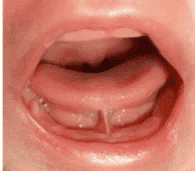 |
| Type II | Attaches 2–4 mm behind the tip | Visible frenulum, but attachment is slightly farther back than Type I. | Reduced tongue elevation and extension. |  |
| Type III | Thick frenulum attached to the middle underside of the tongue | Thick, fibrous band with a short, tight appearance. | Significant restriction of tongue lift. | 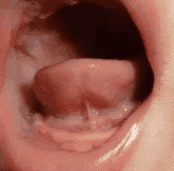 |
| Type IV (Posterior) | Frenulum is hidden beneath the mucosa | Little or no visible frenulum; a tight band is felt during examination. | Restricted tongue elevation despite minimal visible findings. Diagnosis requires careful assessment. | 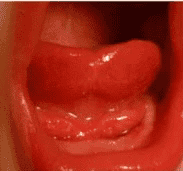 |
What is a lip tie?
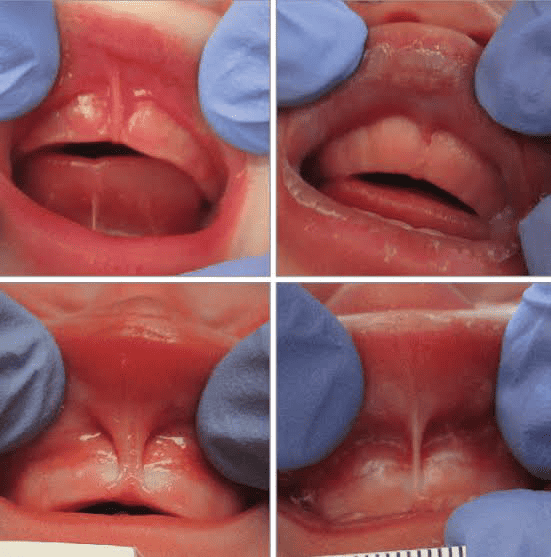
A lip tie occurs when the labial frenulum is too tight or thick, preventing the upper lip from moving as it should. This can make it difficult for the lip to ‘flange out’ or move freely.
Common signs and symptoms of tongue tie include:
- Breastfeeding difficulties: One of the earliest and most common signs is difficulty achieving or maintaining an effective latch, often resulting in a shallow latch during breastfeeding.
- Maternal nipple pain: An ineffective latch can cause significant nipple discomfort, including blanching (whitening), cracking, bleeding, and may increase the risk of conditions such as thrush or mastitis.
- Poor milk transfer: Restricted tongue movement may limit effective milk removal, resulting in inadequate milk intake, poor weight gain, prolonged or frequent feeding sessions, and persistent hunger or irritability after feeds.
- Clicking sounds during feeding: Audible clicking or smacking noises while feeding may indicate an inability to maintain an adequate seal on the breast.
- Additional feeding-related concerns: Infants may fall asleep frequently during feeds, pull away from the breast, or exhibit symptoms such as reflux, colic, and excessive gassiness due to increased air swallowing. Some infants may also have difficulty retaining a pacifier (dummy).
The effects of tongue tie and lip tie extend beyond feeding and speech, with important implications for oral health, craniofacial development, and airway function.
- Increased risk of dental disease: Restricted tongue and lip mobility can impair the mouth’s natural self-cleansing mechanisms, allowing food debris and plaque to accumulate. This increases the risk of dental caries, gingivitis, and other periodontal problems.
- Altered jaw and palate development: The tongue plays a vital role in guiding the normal growth and development of the palate and jaws. When tongue movement is restricted, the tongue may rest in a lower position, contributing to the development of a high-arched, narrow palate and altered jaw growth. These changes may increase the likelihood of orthodontic problems, such as dental crowding and malocclusion.
- Midline gap between the front teeth (diastema): A restrictive upper lip tie may exert excessive tension on the gingival tissue between the upper central incisors, contributing to the persistence of a midline diastema that may require orthodontic correction.
- Airway and breathing concerns: Inadequate tongue mobility may prevent the tongue from resting against the palate, allowing it to fall posteriorly and potentially compromise the airway. This can promote chronic mouth breathing, resulting in oral dryness, an increased risk of dental disease, and possible adverse effects on respiratory health and sleep quality.
Management of tongue and lip tie
- Early detection: Look out for the symptoms discussed earlier, especially if your baby is having feeding difficulties. Don’t hesitate to seek a professional evaluation. A timely lip tie and tongue tie diagnosis can make a significant difference in your child’s development.
- Seek professional assessment: If you suspect your child has a tongue tie or lip tie, consult a qualified healthcare professional such as a paediatrician, lactation consultant, paediatric dentist, or an ear, nose and throat (ENT) specialist experienced in the diagnosis and management of these conditions. A thorough assessment will help determine whether the oral restriction is contributing to feeding, speech, or oral function difficulties and whether treatment is indicated.
- Follow treatment and postoperative instructions: If a frenotomy or frenectomy is recommended, carefully follow all postoperative care instructions provided by your healthcare professional. This includes performing any prescribed stretching exercises, which are important for promoting healing, maintaining tissue mobility, and reducing the risk of reattachment. Scheduled follow-up visits are equally important to monitor healing and evaluate treatment outcomes.
- Consider supportive therapies: Depending on your child’s age and functional needs, additional therapies such as lactation support, orofacial myofunctional therapy, feeding therapy, or speech and language therapy may be recommended. These interventions can help optimise oral function, improve feeding and speech outcomes, and support the development of appropriate oral motor skills following treatment.
Treatment of Tongue Tie and Lip Tie
What are the treatment options?
The primary treatment for tongue tie is a frenotomy (also known as a frenectomy in some cases), a simple procedure that releases the restrictive lingual frenulum. In infants, this treatment can significantly improve breastfeeding by enhancing latch, increasing feeding efficiency, and reducing discomfort for both the baby and the breastfeeding parent.
For infants younger than six months, a frenotomy is typically a quick procedure that can often be performed without general anaesthesia. In older infants, children, and adults, the procedure may require local or general anaesthesia depending on the individual’s age, the severity of the restriction, and the surgical technique used.
The procedure is performed by appropriately trained healthcare professionals, which may include paediatric dentists, oral and maxillofacial surgeons, ear, nose and throat (ENT) specialists, paediatricians, or other clinicians with expertise in tongue tie management. Depending on local healthcare services, a referral from a doctor, paediatrician, midwife, lactation consultant, or other healthcare provider may be required. Because awareness and experience in diagnosing tongue tie can vary among clinicians, seeking a second opinion may be appropriate when symptoms persist despite conservative management.
Is observation an option?
In some infants, particularly those with a thin and flexible frenulum, the restriction may lessen over time or respond to conservative measures. However, if tongue tie is causing significant feeding difficulties, early intervention is often recommended. Prompt treatment can improve breastfeeding outcomes and may prevent secondary complications affecting feeding, speech, and oral development. Delaying treatment beyond infancy may result in a more complex procedure that occasionally requires general anaesthesia.
What happens during a frenotomy?
Before the procedure, the clinician performs a comprehensive assessment to determine whether treatment is appropriate. During the procedure, the infant is gently swaddled and stabilised to minimise movement. The tongue is carefully elevated, and the restrictive frenulum is released using sterile surgical scissors or a laser, depending on the clinician’s technique and available equipment. The procedure usually takes only a few minutes, with minimal bleeding and rapid recovery. Most infants are encouraged to breastfeed immediately after treatment, which provides comfort and allows the clinician to assess improvement in feeding.
Benefits of Treatment and Post-Treatment Care
Treatment of tongue tie (ankyloglossia) and lip tie can result in significant functional improvements, enhancing feeding, speech, oral health, and overall quality of life.
Benefits of Treatment
- Improved feeding: In infants, frenectomy can improve breastfeeding by enhancing latch quality, increasing milk transfer, promoting appropriate weight gain, and reducing discomfort for both the infant and the breastfeeding parent.
- Enhanced speech: Improved tongue mobility may facilitate the production of specific speech sounds, reducing articulation difficulties and improving speech clarity.
- Better oral health: Increased tongue and lip mobility supports more effective oral hygiene, reducing the risk of plaque accumulation, dental caries, and periodontal disease. It may also contribute to normal jaw and craniofacial development.
- Improved eating function: Older children and adults often experience greater ease in chewing, swallowing, and managing a wider variety of foods.
- Improved airway function and sleep: Restoring normal tongue posture may reduce mouth breathing, snoring, and other symptoms associated with sleep-disordered breathing in selected individuals.
- Enhanced overall well-being: By addressing functional limitations, treatment can improve comfort, confidence, oral function, and developmental outcomes.
Post-Treatment Care
Appropriate postoperative care is essential to promote optimal healing, minimise discomfort, and reduce the risk of tissue reattachment.
- Pain management: Mild pain, tenderness, and swelling are common during the first few days after treatment. These symptoms can usually be managed with age-appropriate doses of paracetamol or ibuprofen, as advised by the treating clinician. Cold compresses applied externally to the affected area during the first 24 hours may help reduce swelling.
- Oral hygiene: Good oral hygiene should be maintained throughout the healing period. Teeth should be brushed gently using a soft-bristled toothbrush while avoiding excessive trauma to the surgical site. Warm salt-water rinses (¼ teaspoon of salt dissolved in a glass of warm water) two to three times daily may be recommended for older children and adults to promote healing. Alcohol-containing mouthwashes should be avoided unless specifically prescribed.
- Diet: Soft, cool, and non-irritating foods are recommended for the first few days. Hot, spicy, acidic, crunchy, or hard foods should be avoided until healing progresses. Drinking through a straw may also be discouraged initially, as suction can disrupt the healing tissues.
- Normal wound appearance: A white or yellowish layer commonly develops over the treatment site during healing. This represents normal fibrin formation (granulation tissue) and should not be mistaken for infection or removed.
- Stretching exercises: The treating clinician may recommend specific tongue and/or lip stretching exercises to reduce the likelihood of reattachment and promote optimal mobility. These exercises should be performed exactly as instructed. For infants, gentle wound massage using a clean finger, and in some cases breast milk or another clinician-recommended lubricant, may be advised.
- Activity: Normal activities can usually be resumed as tolerated; however, strenuous physical activity should be avoided for several days to support healing.
- Monitoring recovery: Temporary changes such as increased drooling, mild fussiness, or short-term feeding adjustments are common, particularly in infants adapting to improved tongue mobility. Parents and caregivers should contact their healthcare provider if excessive bleeding, increasing swelling, fever, signs of infection, or persistent feeding difficulties occur.
Lip Stretching Techniques and Tongue-Tie Exercises
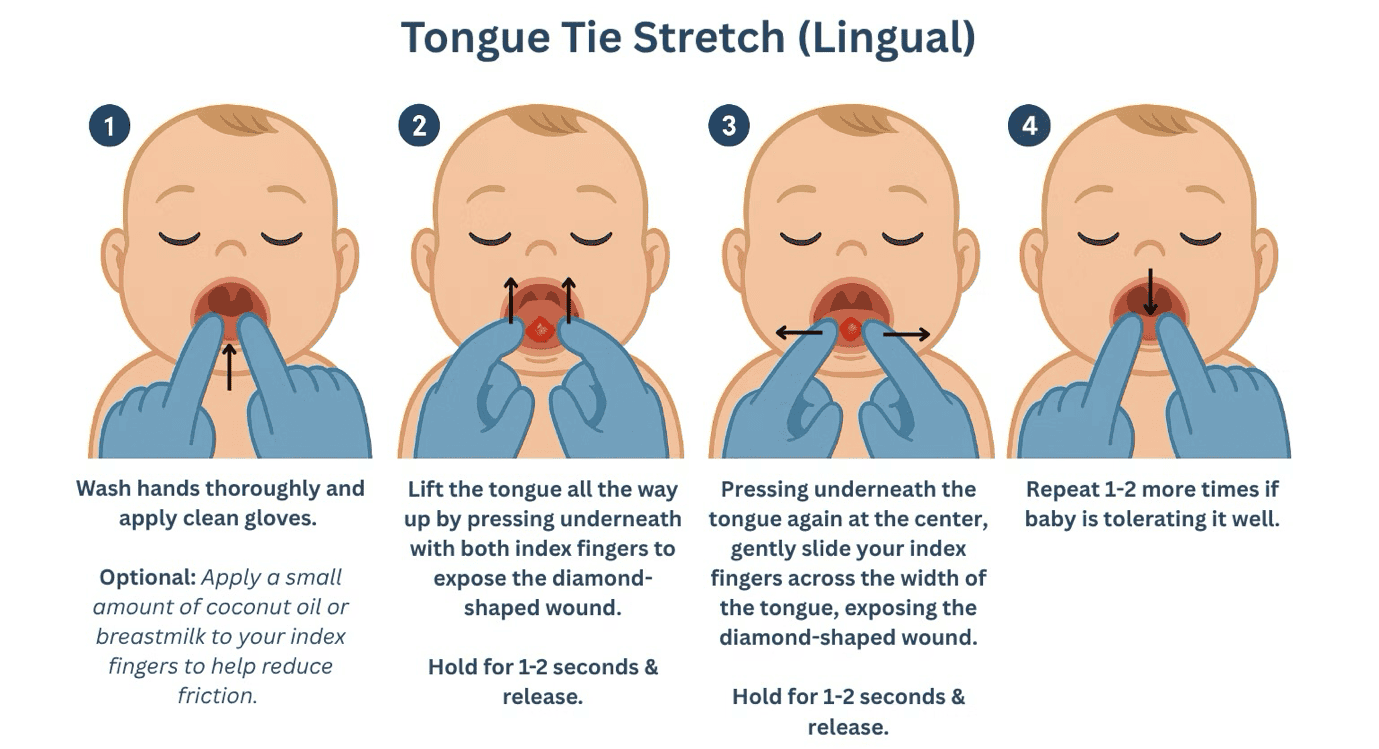
These gentle stretches and exercises are designed to improve oral mobility, reduce tissue tightness, and support more effective feeding and oral development. Perform each movement slowly and gently, paying close attention to your baby’s comfort and cues.
Buccal Tie Stretch
Using the pad of your index finger, gently insert it between your baby’s upper cheek and gum using a fishhook-like motion.
This stretch targets the buccal frenulum, the tissue connecting the inside of the cheek to the gums. Repeat on both sides to promote balanced mobility and reduce tension that may limit normal oral movement.
Regular practice can improve flexibility, encourage better oral posture, and prepare your baby for the other exercises.
Lip Tie Stretch
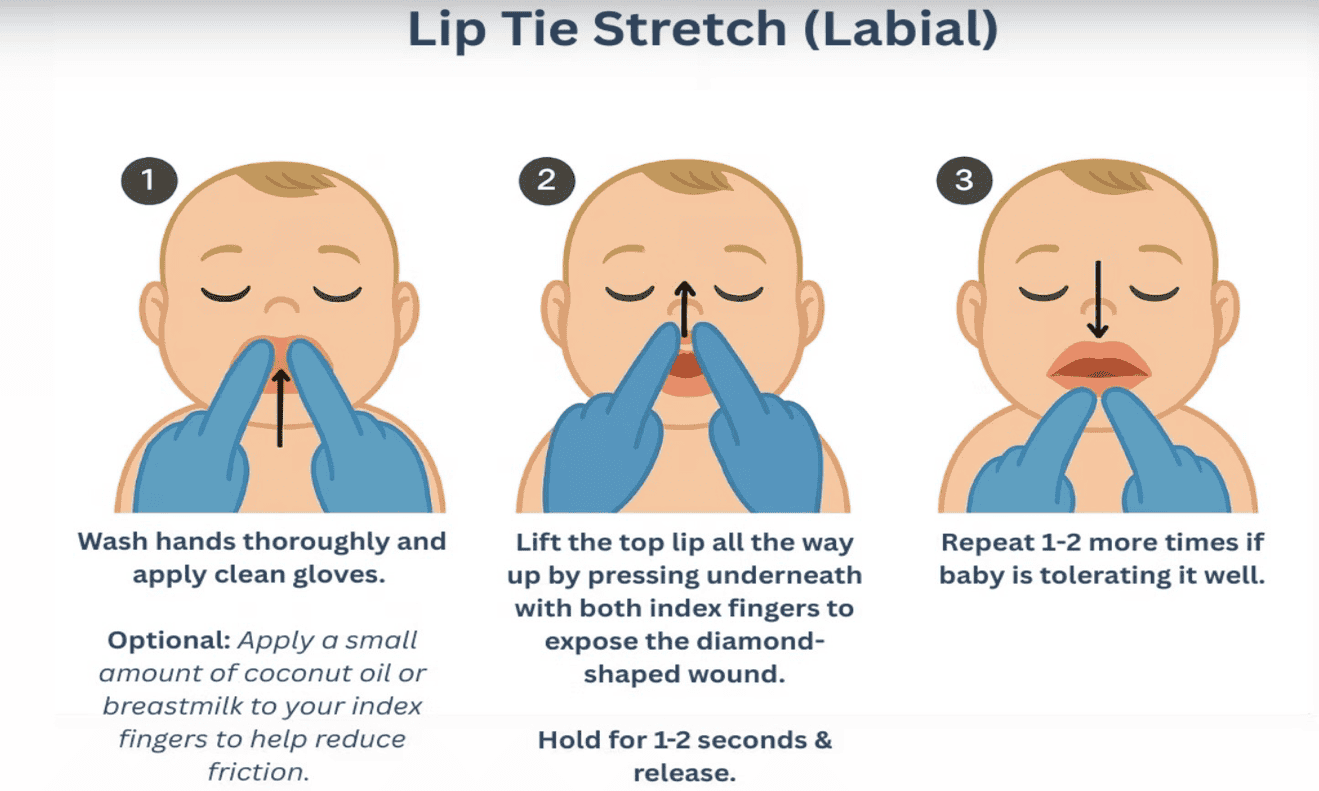
Place your index finger beneath your baby’s upper lip and gently sweep along the lip tie to stretch the upper labial frenulum.
Next, using both hands, gently lift and roll the upper lip upward toward the nose to create a deeper stretch and improve tissue elasticity.
This exercise helps improve upper lip mobility, which can support a better latch during feeding and healthy oral function. It may be used before a lip-tie release to improve flexibility, after a release to help maintain mobility during healing (if recommended by your healthcare provider), or as part of conservative management for mild restrictions.
Tongue-Tie Stretch
Slide your index finger gently beneath your baby’s tongue and apply light upward pressure to stretch the lingual frenulum.
As your baby becomes comfortable, lift the tongue slightly higher, encouraging it to curl upward away from the floor of the mouth. Maintain gentle, steady pressure throughout the movement.
With consistent practice, this stretch can help improve tongue mobility, supporting more effective breastfeeding, bottle feeding, swallowing, and later speech development.
Chin Stretch
Begin with your baby’s mouth closed. Place your thumb beneath the chin and gently guide the lower jaw downward to open the mouth. Hold the stretch for about two seconds, then allow the jaw to close naturally, supporting the movement with gentle upward pressure if needed.
This exercise promotes jaw mobility and coordination, which are important for efficient feeding and overall oral function.
Always follow your baby’s cues and stop if they become distressed. If jaw tightness persists or your baby struggles to open their mouth comfortably, seek assessment from a qualified healthcare professional experienced in infant feeding and oral function.
Fishy Lips
Form a gentle C-shape with your thumb and index finger and softly bring your baby’s cheeks together, encouraging the lips to purse into a “fishy lips” shape.
This playful exercise helps strengthen the muscles around the mouth and encourages lip closure, supporting effective sucking, feeding, and later oral motor skills needed for eating and speech.
Use only light pressure to keep the exercise comfortable and enjoyable.
Can Exercises Alone Correct a Tongue-Tie or Lip-Tie?
Stretching and oral motor exercises can improve flexibility, mobility, and oral function, but they do not remove or permanently change the restrictive tissue itself.
For babies with mild restrictions, a consistent exercise programme may be enough to support comfortable feeding and healthy oral development. However, babies with more significant restrictions — particularly those experiencing persistent feeding difficulties, poor weight gain, ongoing nipple pain during breastfeeding, or markedly limited tongue movement — may benefit from a frenotomy or frenectomy, procedures that release the restrictive tissue.
Exercises and surgical treatment are often complementary rather than alternatives. When recommended by a qualified healthcare professional, exercises may help prepare the tissues before a procedure and support healing and mobility afterwards by encouraging normal movement and helping reduce the risk of tissue reattachment.
