
Alcohol consumption while breastfeeding
When it comes to alcohol consumption and breastfeeding, many mothers don’t know what’s safe and what’s not. Here’s a breakdown on the subject.
The safest option for your baby is not drinking any alcohol. However, moderate alcohol consumption, which means one drink a day, is not known to be harmful to infants.
In the United States, one standard drink is about:
- 12 ounces of beer with 5% alcohol by volume (ABV)
- 8 ounces of malt liquor with 7% ABV
- 5 ounces of wine with 12% ABV
- 1.5 ounces of liquor with 40% ABV
One standard drink (US): different pours, same alcohol
12 oz
8 oz
5 oz
1.5 oz
Beer
Malt liquor
Wine
Liquor
Many experts recommend drinking no more than 1–2 drinks a week.
Pumping and dumping does not speed up the removal of alcohol from your body. The concentration of breast milk alcohol levels and blood alcohol levels are the same and return to normal 2–3 hours after a standard drink. It is recommended to wait for this period before nursing the baby.
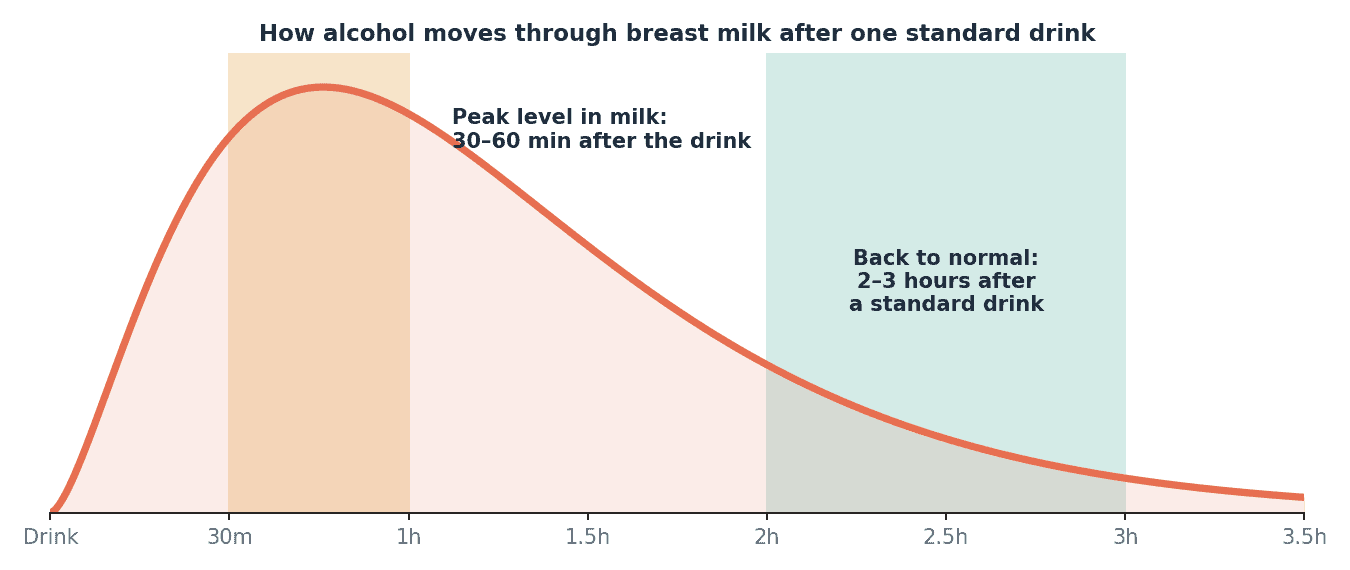
The safest way to ensure the baby gets enough milk is pumping before consuming any alcohol. This can help if you are unsure about breastfeeding after drinking.
Pumping can also alleviate any engorgement and pain associated with not breastfeeding the baby in case you had a drink. If you are unsure about nursing the baby even after 2–3 hours, you can use breast milk alcohol test strips. These are easy-to-use strips that detect even the smallest trace of alcohol in your milk. Simply dip the strip in the milk and wait until the provided time. The change in color indicates the amount of alcohol present in the milk and if it is ready for your baby’s consumption. Some popular brands include:
- UpSpring Milkscreen (30 count)
- BMATS (Breast Milk Alcohol Test Strips) (25 count)
- Frida Mom Breast Milk Alcohol Strips (15 count)
- Miloo Alcohol Test Strips (25 count)
- Glomama Breastmilk Alcohol Test Strips
Over time, drinking too much has been shown to inhibit let-down and decrease milk production. Regular exposure to too much alcohol has shown an adverse effect on baby’s development, growth and sleep, with the highest alcohol levels in milk occurring 30 to 60 minutes after an alcoholic beverage.
There are various negative outcomes for babies who are regularly exposed to alcohol. Infants exposed to alcohol consumed 20–23% less breast milk than those who weren’t. This has an adverse effect on:
- Sleep disturbances with frequent wakefulness and less REM sleep
- Increased crying and startling
- Growth retardation
- Impaired immune function
- Delay of motor development
Possible effects of regular alcohol exposure on the baby
Sleep
Crying
Growth
Immunity
Motor skills
Alcohol has been documented to have adverse effects on the infant’s developing brain, especially during periods of rapid brain development such as the first year after birth. Newborns can only metabolise alcohol at 25% to 50% of the rate at which adults can, which means even one drink can take longer for the baby’s immature system to flush out.
Why even small amounts matter for babies
Milk taken by the baby
Speed of clearing alcohol
Co-sleeping with baby if you have been drinking increases the chances of sudden infant death syndrome (SIDS), as drinking slows down your natural reaction time.
MYTH
“Pump and dump to clear alcohol faster.”
It does not speed up removal. Milk alcohol rises and falls with your blood alcohol.
FACT
Co-sleeping after drinking raises SIDS risk.
Alcohol slows your natural reaction time, so avoid bed-sharing if you have been drinking.
If you choose to drink, plan ahead carefully so as not to expose your baby to alcohol.
If you choose to drink: plan ahead
Pump first
Drink
Wait 2–3 hours
Test if unsure
